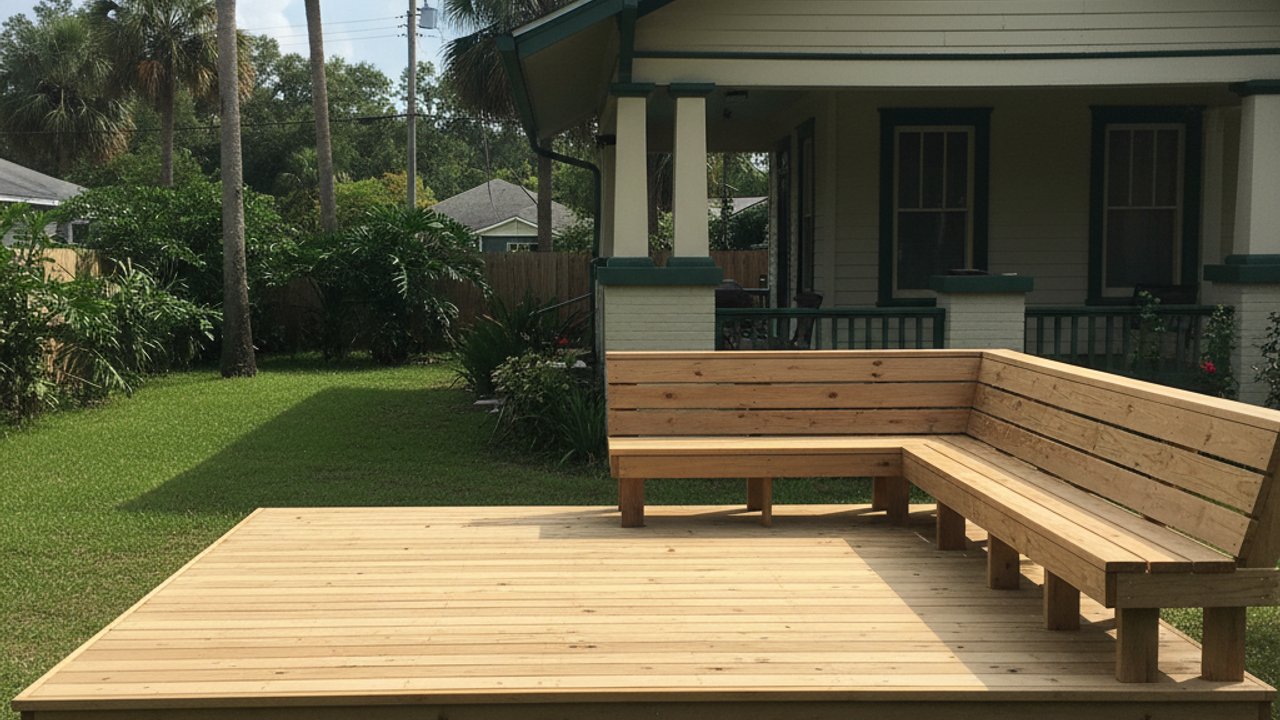
A deck is one of the few home projects where the county actually checks the builder's math. In Miami-Dade, that matters more than it does almost anywhere else in the country, because you're building in a High-Velocity Hurricane Zone. That changes what questions you should be asking before you hire anyone, and it's why picking a deck builder here is a little different than it would be in most of the state.
Ask about wind load before you ask about wood
Miami-Dade's building code requires structures, including decks, to be engineered for sustained winds well above what most of the country designs for. That means ledger board attachment, joist hanger spacing, and railing post connections all have to meet a spec, not just look sturdy. A contractor who can't tell you how their railing posts are anchored, or who shrugs when you ask about the ledger flashing, hasn't thought about what happens in a tropical storm. Permits for decks in Miami Gardens go through the county or city building department depending on the address, and inspections typically happen at the footing stage and again at framing, before any decking boards go down. If a builder tells you permits are optional for a deck this size, that's your first red flag. Most attached decks over a certain height or size need one, and skipping it means you can't sell the house later without a headache.
What the ground and the rain do to a deck here
Most lots around Miami Gardens sit on sandy soil over limestone, with a water table that can sit just a few feet down, higher after a wet summer. That's good news in one way: you're not dealing with expansive clay that heaves footings the way you would in Texas or the Midwest. But it means standing water under and around a deck is common, especially on older lots in neighborhoods like Bunche Park or parts of Carol City where grading wasn't always done with modern drainage in mind. A good builder checks how the yard sheds water before setting footings, not after. Footings here usually go down 24 to 36 inches to reach soil that can actually bear load, sometimes deeper near canals or low spots. Hurricane season runs June through November, and afternoon thunderstorms are a near-daily thing from June to September. That rain has to go somewhere, and if your deck traps it against the house band board, you'll have rot within a couple of years no matter what species of wood you used.
Materials that actually hold up in this climate
Pressure-treated southern yellow pine is still the standard for framing here, but the fasteners matter as much as the lumber. Salt air and humidity eat plain galvanized screws and hangers faster than people expect, even a few miles inland. Hot-dip galvanized or stainless steel hardware costs more up front and saves you a re-deck in eight years. For decking boards, a lot of homeowners here are moving to composite because Miami's humidity and UV load are hard on real wood, cupping and graying it faster than in drier climates. Composite isn't maintenance-free, it still needs cleaning to keep mildew off, but it won't need re-staining every two summers the way pressure-treated pine will. Termites are the other local fact of life. Formosan and native subterranean termites are active year-round in South Florida, so any wood-to-ground contact, or wood framing buried too close to grade, is an invitation. Ask what your builder does about ground clearance and whether they're using treated lumber rated for ground contact where the frame sits low.
Red flags that mean you walk away
- A quote with no mention of a permit, or one that says they'll "handle it" without naming who pulls it or when inspections happen.
- No mention of footing depth or soil conditions specific to your lot, just a flat price regardless of what's under the yard.
- A deposit over half the total cost before any work starts. Materials deposits are normal, paying for the whole job up front is not.
- No general liability insurance or workers' comp certificate available on request. In a state with this much roofing and deck work, an uninsured crew is a real liability if someone gets hurt on your property.
- Reluctance to give you a written scope that names the lumber grade, fastener type, and decking material by product name, not just "wood" or "composite."
Any one of these alone might have an explanation. More than one together usually means the price you're being quoted is low because corners are already planned.
What a real contract and timeline look like
A serious deck builder gives you a written contract that spells out square footage, board spacing, joist size and spacing, footing count and depth, and the brand of composite or grade of lumber, not a verbal promise. Expect a payment schedule tied to milestones: something at signing, something at framing inspection, the balance at completion. A straightforward 300 to 400 square foot deck usually runs two to three weeks from permit approval to final walkthrough, longer if it's screened in or built over a pool, since those involve more inspections and often a separate permit for the screen enclosure. Ask how long before you can put furniture on it and how long before staining or sealing, since pressure-treated wood needs weeks to dry out enough for a sealer to bond, not days. If someone tells you it's ready for a barbecue the next morning, they're either using kiln-dried lumber and saying so clearly, or they're not thinking about it.
None of this is complicated once you know what to ask. It's mostly about making a builder show their work instead of their sales pitch. We've built and repaired decks all over Miami Gardens and the surrounding area, and you're welcome to ask us the same questions above before you hire anyone, us included. You can see more about how we approach this kind of work at Coastal Deck Solutions.